Showing posts sorted by relevance for query Dark Sun: Shattered Lands. Sort by date Show all posts

Friday, January 9, 2026

1993/1994

1993 was a disappointing year with a few highlights.
       
(Note: This entry includes a link to a survey that I'm hoping every reader fills out. I wanted to put it here at the beginning in case you don't make it that far.)
 
It's been so long since we had a yearly transition entry that I almost forgot that I had to do one. We last started a new year almost five years ago, in April 2021.
   
At the time, I noted that 1993 was a peak year, containing more RPGs than any year before or after. I had the idea that if I could just get through 1993, it would be all downhill from there. Alas, owing to new discoveries, 1995 is now the top year (77) until we reach 2012 (88) and 2013 (104) for computer RPGs. (I haven't logged everything for 2014 or 2015 yet). If we consider all RPGs (including consoles and handhelds), we'll also hit a peak in 1995. There really is no "downhill."
    
Hence, my announcement a few months ago that for 1994 and each year thereafter, I would be capping the total number of RPGs explored at 25. I will still alternate "primary" year games with "backlist" games indefinitely, so any game that I skip has a chance of coming up as one of the latter titles. 
       
Current results from my master game list.
      
Many commenters have opined that RPGs entered a slump around 1993 from which they didn't recover until the late 1990s. I'll reserve my opinion on the existence, nature, and duration of the slump until I've played games from those years, but I agree that 1993 feels like the beginning of one. The average GIMLET for 1993 regressed to 31.37, lower than not only 1992 (35.64) but also 1991 (32.29), 1990 (33.2), and 1989 (31.89). Only two titles came anywhere near the top of the list, Dark Sun: Shattered Lands and Ultima Underworld II: Labyrinth of Worlds, both of which rated in the 60s. Number 3, Ambermoon, is all the way down at 51.
   
I have some fond memories from some of the titles in the 40s and 50s. I didn't like Betrayal at Krondor as much as many of my commenters, but it was at least unique in its approach. I think Bloodstone: An Epic Dwarven Tale might have been the height of the Magic Candle series. Unlimited Adventures preserved one of my favorite game engines. But most of the rest, even good ones (Quest for Glory: Shadows of DarknessUltima VII: Part Two - Serpent IsleDungeon Master IIMight and Magic V) are lesser than earlier games in their respective series.
        
Eye of the Beholder III was one of many titles this year that were shadows of the glory of former games in the series.
        
What astonishes me about such an underperforming year is that we're running out of time! Diablo is coming in 1996, Fallout in 1997, Might and Magic VI and Baldur's Gate in 1998. Maybe as soon as the end of the current decade, I will be blogging about huge, open worlds, immersive 3D graphics, lush ambient sound, in-game lore that a player can get lost in, and NPCs so fully realized that I prefer many of them to my actual friends. I rather expected we'd ramp up to those things. But the way it's been going, one day I'm going to be slogging through Whale's Voyage II and then suddenly, boom, Daggerfall. I suppose it's possible. Ultima Underworld seemed to come out of nowhere, after all.
          
How is this only four years away?
       
So 1993 could be the beginning of a slump. Or—again, I say this in complete ignorance of what awaits me in 1994—it could be a momentary pause in which developers were sort-of gathering themselves. The transition from 1993 to 1994 was at the cusp of a lot of things: CD-ROMs, Windows, the availability of the Internet to the average member of the public, the presence of a computer in the majority of western households. A lot of these things were there in 1993, but not long enough for developers writing games for 1993 releases to have made much of them. Maybe 1994 will see that burst of quality that I've been waiting for. Don't disabuse me.
     
1993 Game of the Year Nominees 
       
I'm going to do something different this year by selecting the nominees, letting you vote, and then selecting the final "Game of the Year." I'm not promising to go with your vote, but I'll at least lean towards it. These are what I would consider to be the top contenders:
   
1. Dark Sun: Shattered Lands. I went into this game expecting very little and came out seeing it as a worthy evolutionary step between the Gold Box series and the Infinity Engine games of the later 1990s. Not only was it the highest rated game of the year, but it also rated above a 5 in every category except "Economy." It had all the trappings of a modern RPG: tactical combat, a complex inventory system, full-sentence NPC dialogue, a world steeped in lore, and copious side quests as well as a compelling main quest. What a delight.
       
Full-sentence dialogue is important to my conception of a good RPG.
      
2. Ultima Underworld II: Labyrinth of Worlds. It would be weird to give the 1992 "Game of the Year" to Ultima Underworld and then next year's to the sequel, but then again, these two games are so good that perhaps I ought to drive it home by giving the top prize two years in a row. Not only did I think that Labyrinth was equal to the original in its mechanics, but I also thought it was a far better Ultima game.
         
And 1993 featured it in two excellent games.
     
3. I'm going to pretend here that Ambermoon has a shot because I honestly liked both it and its predecessor, and as I said in my follow-up: "Almost nowhere does the game achieve, or even stray towards, brilliance. But it is almost uniformly not bad." That's almost hyperbolic for 1993. But honestly, most of its strengths are eclipsed by Dark Sun.
     
Ambermoon: a good game. "Good" is a superlative in 1993.
       
4. Yes, sure, Betrayal at Krondor. As I said earlier, its approach is the most unique of the titles I'd consider for "Game of the Year." Its high-quality prose and immersive storytelling set a standard unrealized by any other title I've played except perhaps quasi-RPGs like Star Saga. It also set the bar for RPGs integrated into the canon of a fictional setting. I also liked the open-world exploration and the variety of encounters, but I think Dark Sun did those things just as well, with better RPG mechanics besides. But if you think Krondor deserves "Game of the Year," you're in good company. Computer Gaming World gave it the "RPG of the Year" award in the June 1994 issue. 
       
I didn't love it, but I will always remember it.
      
Let's consider some honorable mentions that have no chance at the top spot but make me wish I gave out more than one award per year.
       
  • Quest for Glory: Shadows of Darkness. It's a great adventure game, atmospheric and fun, but the authors aren't even really pretending that RPG mechanics matter anymore.
  • Perihelion. Talk about atmosphere! I still watch a video of this game's opening every once in a while.  
  • Daemonsgate: Some of the best lore, including in-game cataloguing of that lore, that we've seen so far. The developer did a reasonably good job making the physical environment and NPC dialogue match that lore.
          
I didn't do a very good job selling the idea that there's much of a contest, but I honestly want to hear your thoughts. Remember, "Game of the Year" is supposed to be about influence as much as quality. Anyway, I've created a survey for you to vote, but I thought I'd take the opportunity to do something that I've never done before and poll my readership on your demographics and opinions. I'd thus appreciate if everyone reading this entry took part in the survey, even if you don't have a strong opinion on "Game of the Year." And don't let the survey stop you from talking about your preference in the comments.
      
Year-End Superlatives
     
Total Games: 63 played, 11 BRIEFed, 2 put on the "Missing and Mysteries" list. In total, I wrote about 75 games. That's 11 more than 1992 and the largest annual number for my blog so far. I guess that's the highest number that there ever will be.
 
Highest-Rated Games:  Dark Sun: Shattered Lands (64), Ultima Underworld II: Labyrinth of Worlds (63), Ambermoon (51), Bloodstone: An Epic Dwarven Tale (50), Betrayal at Krondor (50), Unlimited Adventures (50), NetHack 3.1.3 (48), Quest for Glory: Shadows of Darkness (47).
 
Lowest-Rated GamesUltimuh MCMLXVII: Part 2 of the 39th Trilogy - The Quest for the Golden Amulet (3), Mechanical Anarchy (11), Magische Steine (14), Black Dawn (14), Blade of Doom (15), Schelober's Quest for a Babe (15).
      
The worst game of the year. It didn't even know what it was parodying.
        
Longest PlayedUltima VII: Part Two - Serpent Isle at 112 hours. If you want to know why I didn't even give this one an "honorable mention," that's why.
 
Longest Between Start and End: It took me 372 days (but "only" 62 hours of play) before I allowed myself to admit that I wasn't going to finish Angband.
 
Percentage Won: As of right now, I've won 52 out of 59 winnable games, so 88%. I suspect it will drop to 87% after The Fates of Twinion
 
Highest Category Scores
   
  • Game World: Dark Sun: Shattered Lands, Daemonsgate, and Betrayal at Krondor (8s).
  • Character Creation and Development:  Ultima Underworld II: Labyrinth of Worlds and—gods forgive me—Princess Maker 2 (7s).
  • NPCs: Dark Sun: Shattered Lands and Quest for Glory: Shadows of Darkness (7s).
  • Encounters and Foes: Dark Sun: Shattered Lands and Dungeon Master II: The Legend of Skullkeep (8s).
  • Magic and Combat: Dark Sun: Shattered LandsNetHack 3.1.3, and Unlimited Adventures (7s).
        
Dark Sun is the odds-on favorite for its fascinating game world and tactical combat.
       
  • Equipment: NetHack 3.1.3 (9). This is the highest score I gave all year for anything.
  • Economy: Princess Maker 2 (8). Maybe this belonged on the nominee list.
  • Quests: Dark Sun: Shattered Lands (7).
  • Graphics, Sound, and Interface: Ultima Underworld II: Labyrinth of Worlds and Quest for Glory: Shadows of Darkness (7s). 
  • Gameplay: Warlords II (8). This isn't the first time (cf. Pirates!) that we've seen a non-RPG or quasi-RPG take the prize in this category.
   
Best Game with an Awful CategoryDark Sun: Shattered Lands with a 2 for "Economy." The SSI crowd just never learns.
 
Lowest-Rated Game with a Good CategoryStronghold, barely an RPG at all, got a 7 in "Gameplay" for its utterly addictive and replayable nature. Quenzar's Caverns and DragonMaze were both afternoon RPGs that managed to hit a 6 in "Gameplay" for offering the perfect length and challenge for their content.
    
1994 Preview
    
So, once again, the official 1994 play list, in the order that I will cover them, is:
   
  1. Realms of Arkania: Star Trail 
  2. Dark Designs IV: Passage to Oblivion 
  3. The Elder Scrolls: Arena
  4. Yendorian Tales, Book 1
  5. Al-Qadim: The Genie's Curse
  6. Escape from Ragor
  7. Pagan: Ultima VIII
  8. Ravenloft: Strahd's Possession 
  9. Jiji and the Mysterious Forest, Chapter 1
  10. Aethra Chronicles: Volume One - Celystra's Bane
  11. Hexx: Heresy of the Wizard
  12. World of Arch
  13. Darghul
  14. Darkmere: The Nightmare's Begun
  15. Ishar 3: The Seven Gates of Infinity
  16. Nahlakh
  17. Robinson's Requiem
  18. Crystal Dragon
  19. Superhero League of Hoboken
  20. Realmz
  21. Dark Sun: Wake of the Ravager
  22. Alien Logic: A Skyrealms of Jorune Adventure 
  23. Menzoberranzen
  24. Ironseed
  25. Newcomer
  26. Istanbul Efsaneleri: Lale Savascilari 
 
We will have appropriate pre-play discussions as each title nears the starting date. If any of these games ends up getting rejected or otherwise BRIEFed, I will draw a new title from the list at random.
      
As a devoted Elder Scrolls fan, what will I think of the first game in the series?
      
I believe that this is the first year since 1980 for which I have never played any of the games on the list to their conclusion. I have never played any of the 1994 games that didn't make it on the list to their conclusions, either. In fact, I have never played any of the 1994 games at all except about 5 minutes with Pagan (I quit once I saw it had jumping puzzles) and maybe two hours with Arena about 20 years ago. As such, I have no idea at all what to expect.
 
I am most looking forward to Dark Sun: Wake of the Ravager based on the quality of its predecessor. I'm most curious about Arena; knowing so much about the Elder Scrolls universe these days, I'm eager to see how it differed when it was new. I'm equally curious about Ravenloft given the quality of the module on which it was based; though I assume that if the game reproduced that quality, I'd have heard a lot more about it over the years. I also have a lot of curiosity over the foreign games on the list, including World of Arch (Finland), Newcomer (Hungary), and particularly Istanbul Efsaneleri (Türkiye).
   
A preview of the first Turkish RPG.
       
I wouldn't say I'm particularly looking forward to Realms of Arkania: Star TrailDark Designs IV, or Ishar 3, but I suspect they'll all be reasonably acceptable. I had a decent time with their predecessors. I wouldn't say that I'm dreading any of the games—I don't know enough about them—but I will say that I don't have a lot of expectations for Jiji and the Mysterious Forest or Superhero League of Hoboken.
     
We'll definitely see a lot less variety in platforms in 1994. Microsoft is dominant, and only three games on the list—Dark Designs IV (Apple II), Darkmere (Amiga), and Crystal Dragon (Amiga)—lack DOS or Windows releases, at least if my original research is correct. Of course, we'll still continue to see plenty of other platforms in the "in between" games. 
     
Please remember to fill out the survey. Without further ado, let's jump into Realms of Arkania: Star Trail

Tuesday, January 4, 2022

Dark Sun: Shattered Lands: Summary and Rating

 
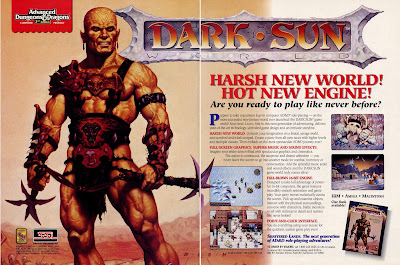
The box showcases a mul gladiator, a race and class unique to the setting.
       
Dark Sun: Shattered Lands
United States
Strategic Simulations, Inc. (developer and publisher)
Released1993 for DOS
Date Started: 2 October 2021
Date Ended: 2 January 2022
Total Hours: 37
Difficulty: Easy-Moderate (2.5/5)
Final Rating: 64
Ranking at Time of Posting: 441/444 (99%)
    
Summary:
    
Dark Sun is an axonometric, continuous-movement, multi-character RPG with turn-based combat. It is set in the Dungeons & Dragons campaign setting of the same name, with rules drawn from AD&D's second edition. A party of four characters must escape life as gladiators and survive on a post-apocalyptic desert planet ruled by insane sorcerer-kings. The main quest involves uniting three villages of escaped slaves to defy the city-state of Draj, but there are a couple dozen side quests, both long and short, offering some of the most complex NPCs, dialogue options, and roleplaying choices of the era. Poor sales and corporate politics prevented this game from enjoying its rightful legacy, which draws from SSI's previous Gold Box games and anticipates the Infinity Engine titles of the end of the decade.
 
***
 
Perhaps the most notable thing about Dark Sun is the degree to which I would like to replay it. Among the previous 433 games, I've encountered some that I've identified as "replayable" and a few that I've actually replayed, but the former cases were mostly theoretical and the latter ones were so short that the replays didn't significantly delay my progress (e.g., Quest for Glory). Dark Sun is different. The game is enjoyable and varied enough that I don't really want to leave it, yet long enough that I must.
      
There are three things that make me want to stay with the game for another round. The first is to experience it again with different classes. Some commenters have criticized my party composition. Some of these criticisms have been worded a little obnoxiously, but the point is fair. The setting offers an entirely new race (thri-kreen) and an entirely new magic class (psionicists), but I decided to go with a more traditional party composition that would have been at home in the Forgotten Realms. Normally, I wouldn't do that. I'm not sure why I was so conservative this time.
    
The second reason is the enormous number of spells that I never cast. The developers did an admirable job programming dozens--perhaps hundreds--of spell animations and effects, and I must have only used about nine of them. I don't feel that I've achieved anywhere near the expertise with the magic system the way I felt after a couple of Gold Box games. The game itself discouraged a lot of spell use by making melee classes so powerful, so in a replay I suspect I'd try an all-spellcasting party.
   
Third, and perhaps most important, Dark Sun offers probably more role-playing choices than any other game to date. There is a nice mix of them, too. Some are about good and evil, but others are about combat versus noncombat solutions to problems, or aggression versus guile. Even the large-scale choice about the direction you choose to explore the game world makes a big difference in how you experience the game. Alas, I have to substitute your experiences for my own in these areas. 
         
Role-playing dialogue options (rather than simple information-gathering ones) are not a wholly new concept, but I think Dark Sun is the first RPG to fully realize them.
      
There are three major areas in which this otherwise-excellent game left me unsatisfied. The first is with, of course, the level caps. Two of my characters had no room to develop for half the game. I frankly prefer it when games have no level caps at all, but I recognize that's hard to do with a ruleset like Dungeons & Dragons. If there are level caps, then, I want them to be unachievable for all but the grindiest of players. If even that isn't possible, then the level caps should not be hit until near the end of the game. Multi-classing should confer an honest penalty rather than serving as a strategy to ensure the character will always have room to grow.
   
The second negative area is the economy. One commenter opined that I might have thought it more useful with a psionicst, as you can apparently purchase psionic rings to enhance your powers. I'm not sure I agree that would have made a huge difference, as you also find plenty of such rings. What frustrates me the most about the economy is that there were at least a couple obvious solutions: first, have your man on the plateau sell spell scrolls. I've never played a D&D game so stingy with its mage spells. In both the Gold Box and Infinity Engine games, you can always count on plenty of scrolls to teach you the spells that you don't select while leveling up. Here, there are only about six of them. 
      
Another possibility would have been to tie the economy to a survival element. If you're going to introduce a world in which "water is more valuable than gold," then prove it by making us pay through the nose for a drink. I've mentioned the lack of survival elements several times. It's not that I particularly want to have to worry about food, water, and shelter when I play a game. In fact, when these elements are done poorly, they can really ruin a game. In this case, though, the very setting almost demands it.
        
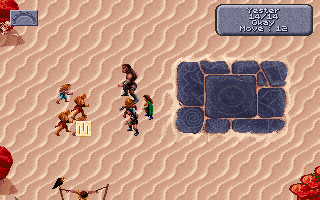
"Shattered" or not, I can spend as long as I want wandering these lands with no fear of hunger, thirst, or exposure.
    
I had mixed feelings about the game's graphics. There's no question that, overall, they were good--a huge step forward from the empty areas and repetitive textures of the Gold Box. No previous top-down game except perhaps Ultima VII has featured this level of hand-crafted detail. Most maps offered at least one set piece worth stopping gameplay just to look at, which is perhaps the very definition of "good graphics." Some of the area- or event-transition screens are particularly well done. And yet there was an extent to which they just didn't work for me. Part of the problem is the perspective, which is neither top down nor entirely angled. The game wants to have it both ways, using inconsistent perspective angles, sometimes on the same scene. Most of the time, we view the action on a single north/south axis of rotation; I think axonometric perspectives are almost always better when rotated on two axes, so you're facing the world from either the southwest or southeast.
   
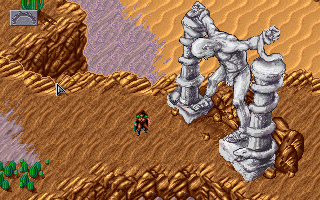
The bigger issue for me had to do with the age-old issue of trying to accomplish too much with too few pixels. My colorblindness always plays a role in such assessments, so your mileage may vary. To me, this is the sort of game where I'm always talking to bushes because I mistake them for people, trying to pick up piles of straw because I mistake them for gold. I admire that the game reaches for a next level when it comes to graphical detail, but I don't think it could achieve what it wanted to achieve without SVGA resolutions. I don't want to make too much of this, though, because I agree it's close.
 
This is a really cool statue. Now is that bulge on the ground beneath it something I can pick up or just decoration? Are those people or cactuses in the lower-left?
       
Anyone upset with my using an exploit to win the final battle will be happy to know that I did win it legitimately, although I couldn't do it without losing my preserver/druid one time and my ranger/thief another. I discovered three things in my continuing investigations:
   
  • If you don't use the genie just before the final battle, the first wave of enemies is a bunch of daggorans, earth elementals, and scorpions. After you defeat them, you get what I described as the "first wave" last time.
  • The game does use dexterity in its calculation of initiative. When I hex-edited my characters to 25 dexterity, they all went first in the final combat. Prior to hex-editing, the maximum dexterity I had was 20, and everyone went last, so the sweet spot is somewhere in between.
  • Area-effect spells do remain on the screen in between combats.
    
The "first battle" that using the genie manages to avoid.
     
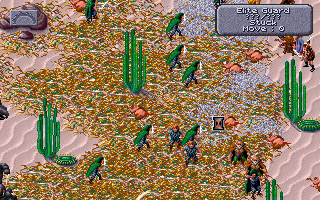
That last point is what allowed me to win. After the relatively easy initial battle, while one enemy was still alive, I filled the field with every negative area-effect spell I could think of: "Grease," "Wall of Fog," "Web," "Entangle," and a summoned fire elemental. "Entangle," as Wonko offered, turned out to be the most useful of the lot, keeping the elite guards out of melee range. My summoned enemies rarely lasted more than a round, but I kept summoning new ones, occupying the attention of the archers and spellcasters while I slowly picked off the enemies with arrows, spells, and usable items. My ranger/thief had a necklace that cast "Disintegrate," which I under-prized in my last attempt. I managed to nail the army commander with that on the first round. The only real problem was that spell effects on the field prevent you from casting other area-effect spells in the same place, so I could only "Fireball" and "Ice Storm" the fringes of the battlefield.
     
Enemies in the final battle advance over a field of whatever I could throw at them.
      
I expect the game to rival the best Gold Box games in the GIMLET. Let's see.
   
1. Game World. While the Dark Sun setting is not anywhere near as popular as the Forgotten Realms, I found it paradoxically more accessible for that reason. There is an extent to which games set in the Realms expect you to have some existing knowledge of the world, whereas I felt the manual for Dark Sun told me everything I needed from the start. Compare the first paragraph of the manuals for Pool of Radiance and Dark Sun:
   
[Pool of Radiance]: To most inhabitants of the lands of the Inner Sea, the Moonsea and its cities represent the border between civilization and barbarism. The Moonsea sits like a great plug straddling the territory between the Mountains of Vaasa and the Nomad Steppes, protecting the southern territories from the incursions of savage Northerners. To the south of the Moonsea lie the civilized lands of Cormyr and Sembia. To the north lay hundreds of square miles of cold and unforgiving wastes. Even when the southern kingdoms are themselves besieged by orcish hordes, dragons, and fell monsters, they take comfort in the fact that, "It's worse around the Moonsea."

[Dark Sun]: Athas, the world of Dark Sun, was once as pleasant as any other. But, after many thousands of years, powerful mages found ways to gain power through draining the planet's vitality. At their zenith, these wizards caused the sun to transform from a pleasant yellow glow to a ranging crimson fireball on the horizon. The seas evaporated and were replaced by huge basins of silt.
   
The Dark Sun manual starts you at 30,000 feet and zooms in on the city of Draj, whereas the Pool of Radiance manual starts you at street level. There are literary virtues in the latter approach, but it's not very helpful for someone who doesn't know that the Moonsea is on the continent of Faerûn, which is geographically and ethnically varied. Subsequent paragraphs don't help. By the end of the Pool introduction, the first-time visitor to Faerûn is lost, whereas by the end of the Dark Sun opening, the player understands the basic cultural, religious, and political situations on Athas.
   
Of the two, Dark Sun also shows the most originality. I know it's not wholly original, of course; the basic concept goes back to Vance's Dying Earth novels, and many of the place names and tropes are drawn from Mesoamerican mythology and culture. Regardless, we haven't played many CRPGs in such places.
   
There are ways in which Dark Sun doesn't make the most of its setting. The presence of the "sorcerer-king" is never really felt in the game (in fact, he's mysteriously absent); the world never felt like a sun-scorched hellscape in which we struggled to survive; and it did seem a little unrealistic that a couple of slave towns could defy the armies of an entire civilization. However, I did enjoy the largely-new selection of monsters, the limited exposure I had with psionics, and typing names like "Teaquetzl." I also appreciated how the game reacted to my party's accomplishment, changing dialogues and encounters appropriately. A strong category. Score: 8.
       
My final "world map." It seems bigger when you're playing.
            
2. Character Creation and Development. It is certainly one of the better Dungeons & Dragons titles when it comes to party creation. Different party compositions face very different games, both mechanically and thematically. I appreciated options like thri-kreen and psionicists even if I didn't pick them. As usually happens during the first nine D&D levels, you do get notably hardier and deadlier as you level up. However, the level caps really hurt my enjoyment of this category, and I'm getting sick of magic-users having the only choices during leveling. Score: 6.
      
My party leader earned 647,744 experience. She hit her last level at 300,000. And you can't multi-class gladiators, so that was never an option.
    
3. NPC Interaction. A great leap forward in this category, one of few non-Ultima games of the era with actual dialogue options and character personalities. This may in fact be the first game with full-sentence dialogue options that are truly options (in the sense that you can't choose all of them), with associated role-playing connotations. There's still work to be done in all of these elements, but Dark Sun was an important stop along the way. Score: 7.
   
4. Encounters and Foes. Dark Sun is great with serendipitous encounters, many of them unnecessary to the main plot, and as I discussed above, most of them have at least a couple of approaches and options. As for the foes, I'm almost never disappointed by the bestiary of a Dungeons & Dragons game, particularly when it comes with a Monster Manual-style description of each new enemy. The variety of special attacks, defenses, and other characteristics always makes for interesting combat situations. Another great category. Score: 8.
       
The manual's detailed description of a "daggoran."
     
5. Combat and Magic. The turn-based system is an excellent showcase for D&D rules and spells, and if nothing else, I appreciate the sheer number of spell effects and animations programmed into this game. The inclusion of the psionicist class means there's about 33% more than a comparable Gold Box offering. I did find the combat a little too easy (until the end), and there is an extent to which I still prefer the Gold Box, where the grid made it easier to identify obstacles, movement paths, and spell effect areas. Score: 7.
   
6. Equipment. It's okay. About as good as a standard D&D game. Upgrades were regular enough. I appreciated extra slots for arm, leg, and waist items, but the game didn't really use them very often. I was never sure whether I was seeing the negative effects of some items (e.g., some characters are supposed to have penalties with metals). Going in and out of inventory was a bit of a pain, but that's more of an interface issue. Score: 6.
       
My ranger/thief's final backpack. I appreciate the clear statistics.
     
7. Economy. Alas, the game follows the SSI tradition by failing miserably in this category. Throughout the game, you essentially keep acquiring wealth without ever having anything interesting to spend it on. As I pointed out, a selection of spell scrolls in some magic shop would have completely turned this category around while simultaneously adding to the character development and combat options. Any number of other options could have worked, too, such as tying the economy to the survival mechanic or allowing me to pay off the sorcerer-king's guards. Score: 2.
  
8. Quests. Dark Sun is not only one of the few games of the era to recognize the concept of side-quests, it gives you role-playing choices within those side quests. The main quest has only one outcome, alas. Score: 7.

9. Graphics, Sound, and Interface. I had small issues with both graphics and interface. I talked about graphics above. As for the interface, it mostly works. It uses the mouse and keyboard redundantly, and I appreciated the map plus little touches like the weapon statistics and the full descriptions of each spell under the right-mouse button. I still think there should have been an alternative to using the right mouse button to change what the mouse does. It so interrupts the flow of exploration to have to use the mouse to switch between searching, using, and talking, particularly since the action pauses as you do so. (This is something that's hard to articulate; you just have to experience it.) As for sound, the game has some nice effects but doesn't otherwise break any new ground here. Score: 6.

10. Gameplay. Good stuff here: The game is nonlinear within a somewhat small map. It is highly replayable for both different character options and for different encounter choices, and it is well-paced. (I've yet to codify this rule, but I think that a game should last no longer than 2/3 its GIMLET total in hours. Dark Sun hits it precisely.) It is perhaps a little too easy, again except for the first and final battles. A fast travel option was completely unnecessary, and I think maybe the party should only have been able to save at campfires. Score: 7.
   
That gives us a final score of 64. That puts it fourth on my overall list, just a smidge behind Pool of Radiance (65) and, surprisingly, one point ahead of Ultima Underworld (62). I don't think I have any quarrel with that. Dark Sun is an excellent debut, offering as much for its interface style as Underworld did for first-person exploration.
        
I had been looking for the moment when "engine" became a commonly-used term among non-developers. It must have been before this.
     
Some previous comment had given me the idea that despite its qualities, the game didn't review well in its own time, so I was pleased to find that the opposite was true. Curiously, perhaps the worst rating (3/5 stars) comes from the May 1994 issue of Dragon, but this was after the magazine had transitioned the column from the always-sunny Hartley and Patricia Lesser to Sandy Petersen, who seems to have disliked turn-based combat. "You must walk each of your characters around the screen each turn, select the opponents they bash on, fire their missiles, cast their spells, etc. Then, you wait for the opponents to do the same right back to you." To me, that's just a simple description of how turn-based combat works, but Petersen means it pejoratively, calling it "lengthy" and "tedious." He has a good point I didn't make, but agree with, about the difficulty of finding spells by symbols alone. Otherwise, he had praise for the encounter system.
  
Scorpia had a mostly-positive review in the December 1993 Computer Gaming World, but I was a little irked by it anyway. (This is painful, for as much as I fight with Scorpia, I generally go into one of her reviews hoping that she agrees with me.) First is the title: "Good-bye, Gold Box!" This sentiment continues with the second paragraph: "Players familiar with the [Gold Box] games may approach Dark Sun with deep suspicion, thinking it 'more of the same.' Happily, this is not the case." Whoa, whoa there. Look, I'll be the first to agree that the Gold Box engine had some faults and probably needed to be scrapped by 1993, but that doesn't mean we should be talking about it so disrespectfully. "Deep suspicion?!" The Gold Box resulted in a dozen high-quality games over five years, the closest representations of tabletop roleplaying as we had to date. If SSI had released a Gold Box game in 1993 instead of Dark Sun, it would have been a damned good game. Players should be on their knees thanking Ao for the engine, not dancing on its grave.
   
Anyway, her review opens with a series of complaints about the changes to the system rules, such as the assignment of clerics to elemental spheres, the use of different materials for armor, and the lack of armor for druids and thri-kreen. I don't think she understands which of these changes are AD&D second edition rules and which are campaign setting rules, but either way, I think she needed to give them more of a chance. Many first-edition rules seem silly, too. Just because cleric magic worked one way in one setting doesn't make it worse if it works a different way in a different setting. Anyway, she had praise for other changes including gender equality in attributes (no more comparably weaker female fighters) and not having to memorize spells. She has the same complaint I did about lack of spell scrolls to assuage the difficult choices the preserver has to make when leveling up, and she had the same trouble I did with the final battle (plus an additional technical issue I didn't experience). Her summary:
   
[M]y impression of Dark Sun is favorable. SSI is moving to a more mature form of CRPG. The completely new engine, world, rules, and graphics, along with a new emphasis on story, does a lot to distance them from the Gold Box image. As with all new things, the first steps are apt to be shaky. Still, Dark Sun (with a little overhaul) shows much promise for the future, and promises a good game to play right now.
   
Again, I'm not sure why we have to trash the Gold Box while praising the new approach, but otherwise I agree with the sentiments she expresses. In June 1994, the game was nominated for the magazine's "RPG of the Year," but the prize went to Betrayal at Krondor. I haven't played that yet, so I can't tell you whether I agree.
   
Scorpia wasn't entirely wrong about the "promise for the future," but neither was she entirely right. The Dark Sun engine wasn't a one-hit wonder. It spawned a sequel, Wake of the Ravager, in 1994, plus an adaption to another rare D&D campaign setting in 1994's Al-Qadim: The Genie's Curse. There was even a 1996 MMORPG called Crimson Sands. But the sales of these late-SSI D&D titles (and several others) were mediocre, insufficient to repair SSI's increasingly-rocky relationship with TSR. (As for that relationship, I'm not even going to try to compete with Jimmy Maher's excellent coverage from September 2019.) The two partners announced a parting of ways in early 1994, although SSI continued publishing under the license until mid-1995.
    
I have some open questions about the games that influenced Dark Sun and the games that it influenced. In its basic interface--an axonometric perspective with continuous (non-tiled) movement and turn-based combat that takes place on the same game map as navigation--it was preceded by Ultima VI and Interplay's two Lord of the Rings titles. If you're willing to remove one of those elements, you have Ultima VII, Challenge of the Five Realms, and Darklands. Any or all of these games could have influenced the Dark Sun engine, but I've not been able to find specific confirmation that any of them did. Likewise, I haven't found any confirmation that the Infinity Engine developers were influenced by Dark Sun, but it wouldn't surprise me. Most of the elements are there, including interesting NPCs and full-sentence dialogue options. (I would love to experience a game with the interface of the Infinity Engine but the turn-based combat system of Dark Sun.) I'll try to reach the right people in time for my coverage of the sequel.


Sunday, October 10, 2021

Game 434: Dark Sun: Shattered Lands (1993)

SSI optimistically launches a new franchise.
    
Dark Sun: Shattered Lands
United States
Strategic Simulations, Inc. (developer and publisher)
Released 1993 for DOS
Date Started: 2 October 2021
    
As I think I've mentioned in previous articles, the entire period of 1992-1998 is a bit of a blind spot for me, as I missed it when it was "live." During that period, I managed to put my CRPG addiction on hold while I attended school, courted Irene, and established myself in my profession. The only computer I owned during the period was a Mac, which wasn't exactly teeming with RPG titles. (I did play a small number of RPGs, but that's not important for the overall anecdote.) By 1999, I was well into my career, I had married Irene, and we had bought our first house, and I finally felt comfortable having hobbies again. My first purchases were Might and Magic VI and Baldur's Gate, and naturally I was blown away by what had happened in the intervening years. I still remember sitting down with a pad of graph paper to play Might and Magic VI. I was expecting tiles.
   
Might and Magic VI, Baldur's Gate, and their sequels remain among my favorite RPGs, and my GIMLET was largely based on them. That isn't to say that either would score a perfect 100, but both of them would probably score at least a 5 in every category. In other words, while there was clearly room for improvement, neither game was obviously lacking in anything that I'm looking for in an RPG. I'm using those games as examples, but what I'm saying is true of a lot of games in the era. By 1998, and certainly by the mid-2000s, an RPG without a fully fleshed backstory, intricate character development, solid combat tactics, memorable NPCs, copious side quests, and frequent role-playing options was a rarity rather than a rule. Some games have done it better than others, but the genre as a whole "arrived."
    
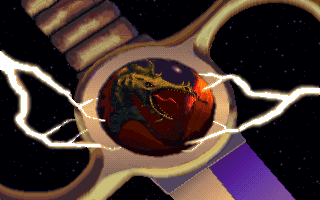
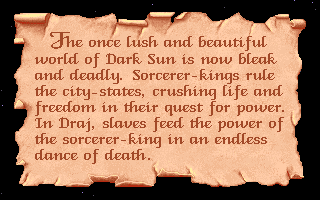
An opening cinematic dramatizes the transformation of the world into a desert wasteland.
      
Ever since I began 1992--began, effectively, my "dark period"--I've been wondering when we'd hit the first game that crossed that threshold. Unless its opening hours have fooled me, Dark Sun: Shattered Lands seems to be it. This game is the complete package. There's still room for improvement, particularly in graphics and sound, but otherwise I'm not seeing anything that the Infinity Engine lacks. Again, I'm only judging it by its opening hours, but I can't see why this game isn't going to rocket to the top of the list.
   
Many of my commenters have praised the game, but these opening moments have been so good that I don't understand why it isn't far more famous than it is. Everything about it so far has been as good or better than the best Gold Box game, starting with the much more interesting setting, and continuing to tactical combat, interesting role-playing choices, multiple ways to solve problems, and the first regular, full-text dialogue options. If I had encountered this, rather than Baldur's Gate, in 1999, I would have been no less impressed.
   
Dark Sun takes place in the D&D campaign setting of the same name, and to me it's the most interesting setting in the D&D multiverse. (Planescape is too wacky for me.) In fact, it's almost too interesting for D&D--I think I would like it better without the various baggage that comes with the rest of D&D's second edition, including the canonical races. This is not a setting that particularly needs elves. The world is called Athas, and it is a post-apocalyptic wasteland. It was once green and blue, and ruled by a peaceful halfling civilization, but sorcerers competing for power drained energies from the biosphere and somehow caused the sun to flare. The oceans burned away and much of the remaining planet turned to inhospitable desert. The remaining people live in city-states ruled by cruel sorcerer-kings. Slavery is common, metals are rare, and water is more precious than gold. It's Tolkien meets Mad Max. I love it.
   
Person 1: "Great setup! Clearly, we should call the setting 'Bright Sun!'" Person 2: "Nah. Let's call it 'Dark Sun.'" Person 1: "But the sun is bright." Person 2: "Exactly!"
      
The setting creates some unusual changes in the standard D&D template. Races, for instance, start out on familiar ground with humans, dwarves, elves, half-elves, and halflings, but they include three new races that are all in some ways unfortunate. The first is half-giants. Their existence raises questions I don't want to answer, especially given that half giants are 10-12 feet tall and weigh "in the neighborhood of 1,600 pounds," so actually giants must be even taller and heavier. Obviously, that creates an alarming picture that you don't need me to draw.
   
Then we have "Muls," which are a crossbreed of humans and dwarves, which there's nothing wrong with except the likely source of the name. [Ed. For clarification, I was speculating that the term was a shortening of mulatto, which to be fair wasn't quite as controversial a word in 1993. To be even fairer, though, mule is an equally probable source.] Finally, you inexplicably have the option to play a thri-kreen, an insectoid monster that appears in other settings but never as a PC. I'm not sure why this monster, and no other, becomes a playable character class. 
   
The classes also have some weird modifications. You can play single or (if non-human) multi-classed fighters, gladiators, rangers, preservers, clerics, druids, thieves, and "psionicists." Gladiators seem to have all the strengths of fighters, none of the weaknesses, and some additional special abilities. Their only drawback is they can't be multi-classed. Preservers are this setting's magic-users, regarded with suspicion given what mages have done to the planet, although the manual says that preservers somehow "cast their spells in harmony with nature, giving back the energy they take from the land." I take it this means that regular mages exist in the setting, but you just can't play them. 
     
There's clearly some influence of Mesoamerican mythology on the proper names of the setting.
       
Clerics go through the oddest transition. There are no gods in the setting, except the cults dedicated to some of the sorcerer-kings, so clerics worship elements rather than gods. When choosing to be a cleric, you have to decide whether to worship earth, air, fire, or water, and the selection limits your spells and equipment. I'm frankly not sure I see what the difference is between clerics and druids, who also worship the elements but "unlike clerics . . . are responsible for guarding a section of land." I feel like it would have made more sense to dump clerics entirely from a setting that has no gods and thus give druids an emphasis that they don't typically receive. 
   
Supposedly, every character in this setting has some level of psionic ability, which comes in three forms: psychokinesis, psychometabolism, and telepathy. During character creation, you identify each character with one of these types of psionics. "Psionicists" (what a cumbersome name) specialize in psionics. 
   
This is the party I created, but I welcome other suggestions as I'm very early in the game and don't mind replaying the opening moments:
   
  • Violencia, a human female gladiator with psychometabolism
  • Sunstroke, a half-giant male fighter/cleric, neutral good, fire sphere, psychokinesis
  • Featherweight, halfling female ranger/thief, chaotic good, earth sphere, telepathy
  • Yester, half-elf male preserver/druid, true neutral, water sphere, psychometabolism
    
I figure if Violencia seems to be reaching a level cap, I can always dual her to something else. I eschewed psionicists because everyone gets some psionic abilities anyway, but let me know if you think the class is mandatory. I could probably give up Sunstroke's cleric half. I couldn't bring myself to try to role-play something as alien as a thri-kreen.
    
Attribute rolls are extremely generous. It takes only a few re-rolls to get everything above 16, and if that wasn't enough, you can modify your statistics to "match your favorite D&D character" right on the creation screen. If that wasn't enough, any character of any race can have statistics up to 20. Characters start at Level 2 or 3 and have fairly generous hit point totals.
     
"My favorite character just happens to have 20s in everything"--at least half of contemporary players.
       
The characters all begin the game as slaves in the fighting pits of the city of Draj, whose sorcerer king is temporarily missing. The opening moments allow you watch a combat between another gladiator and a "rampager." Then, it's the party's turn.
     
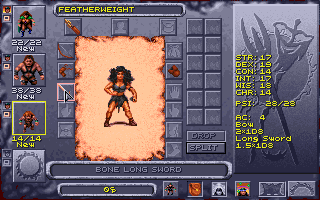
Characters come with equipment appropriate to their classes, put in appropriate slots in a paperdoll inventory. I like lots of opportunity for equipment upgrades, and this game offers it, with separate slots for chest, leg, and arm armor, boots, belts, rings, and cloaks. You equip missile weapons and melee weapons in different slots, and the game chooses between them based on distance. This system is a nice improvement over the Gold Box requirement to go into the inventory and switch between the two in the middle of combat. I also like that the inventory clearly shows the statistics for each item without requiring the player to look things up in the manual. There are considerations of equipment material (bone, wood, metal), and associated class restrictions, that I still have to learn.
     
Equipment on my halfling ranger/thief. She starts with chest and leg armor, a bow, and a long sword.
     
The combat system is a clear evolution from the Gold Box, perhaps with some lessons taken from Spelljammer. It is turn-based, offers numerous potential actions for each character, and emphasizes the importance of terrain and positioning. There are some interface elements that I don't love, but I'll cover that later after I have some more experience. There's a right-click-to-change-action-icon system that may have been lifted from the Quest for Glory games.
     
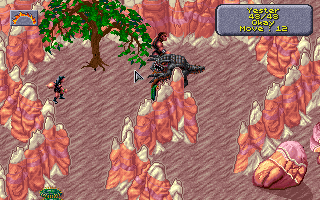
The party (right) faces approaching enemies (left). I'm about to cast "Magic Missile" at one of them.
     
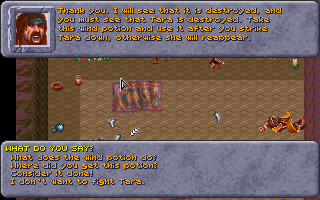
With weapons and "Magic Missile," I defeated the group of ravagers who opposed us. The announcer belittled and sneered at our victory, and right away we had a role-playing choice: whether to go back to our pens or shout something back at the announcer. I tried the latter ("Pathetic?! I'll take on your best!") and was soon torn apart by mountain stalkers and other high-level foes.
    
Lesson learned: Don't antagonize the announcer.
   
Reloading, we adopted the meek approach and went back to the cells. We had some dialogue options with Kurzak, leader of the guards, as we entered. Our choices in response to his orders were:
  
  • Help me escape, or I'll kill you.
  • Tell me about your job.
  • Who is the half-giant?
  • Have many slaves escaped?
  • How well-guarded are the exits?
     
I've been waiting for this moment in RPG history. We've had dialogue keywords before (e.g., Ultima IV-VII; The Magic Candle). We've had dialogue "stances" (e.g., Pool of Radiance, Starflight). We've even has some full-text responses (e.g., Sentinel Worlds: Future Magic, Hard Nova). The Gold Box sometimes offered dialogue choices as part of occasional role-playing encounters. There were lots of precursors. This is the first game I can remember, however, in which full-text dialogue is a constant gameplay mechanic, and in which the dialogue options regularly embody different role-playing choices rather than just requests for different types of information. Part of me was worried we wouldn't get these until Baldur's Gate in 1998.
    
The first choice leads to combat--unwinnable, in my case, but I suspect an experienced player could get through it. The ultimate goal seems to be for the party to escape from their life of slavery, and the game seems to offer several macro-level ways to go about it. The first is just to attack Kurzak and his guards ("the half-giant" is Legcrusher, the monster trainer); the second to hitch the party to one of two prison kingpins and join their escape attempts; the third to figure out a route for themselves. There may even be more. Dumb options, like bluntly asking the slavemaster "how well-guarded" the exits are, end in failure or punishment.
     
But no monsters rejoice.
    
In further conversation (after a reload), Kurzak explains that most slaves have to work building the pyramid, so the life of a gladiator isn't so bad. We'll be called every once in a while to fight in the arena, but the time is otherwise ours. It later transpires that "the call" comes about once every 8 hours game time, which is plenty of time to do other things unless we sleep. We can demand a new battle at any time by knocking on the door to the pens.
    
Wandering around the slave pens.
         
I continued playing until the end of this sequence, but it was a week ago. I didn't have time to finish this entry in the intervening period, and while I can reconstruct what happened from screen shots, I'd rather replay it and blog about it fresh. So I'll wrap up here, a bit short, and pick up again in a few days, after I've had a chance to hear some thoughts on the party composition. If the game can't be won without a psionicist, or a "Mul," or whatever, I'd rather know now.
     
The party talks to another gladiator about escaping.
    
One thing that surprises me is that the game offers no food and water system. Perhaps that's a blessing, but I would think a game set on such a world would be partly about survival, and that "where am I going to get my next drink of water?" would be a major consideration for a party considering escape into the desert. 
   
Dark Sun otherwise makes a great first impression. I'm really hoping that it holds together.
 
Time so far: 3 hours